

Food Drone Delivery: Revolutionizing the Food Delivery Industry
August 7, 2024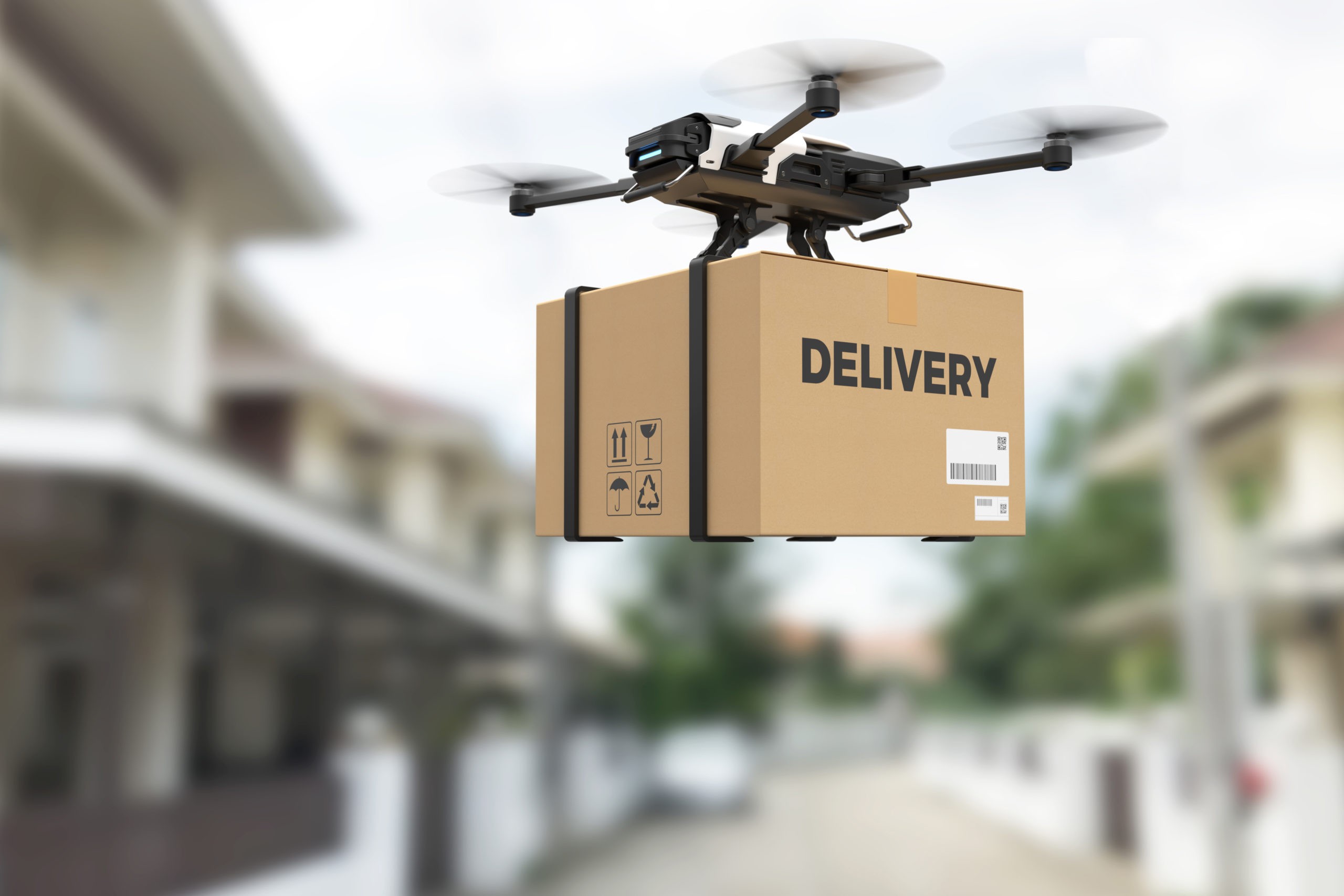
10 Innovative Drone Delivery Ideas to Transform Your Business
August 8, 2024
The Role of AI and Automation in Drone Delivery
As drone delivery evolves from a futuristic concept to an operational reality, the integration of Artificial Intelligence (AI) and automation is playing a pivotal role in shaping the future of this technology. These innovations are not only enhancing the efficiency and safety of drone operations but also making large-scale, autonomous delivery systems feasible. This article explores how AI and automation are transforming drone delivery and what the future holds for these cutting-edge technologies.
1. AI-Driven Route Optimization
a. Efficient Pathfinding
One of the most significant contributions of AI to drone delivery is route optimization. AI algorithms can analyze vast amounts of data, including weather conditions, air traffic, geographical obstacles, and delivery priorities, to determine the most efficient route for each delivery. This optimization minimizes flight time, reduces energy consumption, and ensures timely deliveries.
b. Dynamic Adjustments
AI-powered drones can make real-time adjustments to their routes in response to changing conditions. For instance, if a sudden storm emerges or if airspace becomes congested, the AI system can reroute the drone to avoid delays or potential hazards. This adaptability is crucial for maintaining reliability and safety in drone delivery operations.
2. Autonomous Flight Capabilities
a. Beyond Manual Control
Automation in drone delivery is moving beyond manual control to fully autonomous flight. Drones equipped with advanced AI systems can take off, navigate, and land without human intervention. These autonomous drones are guided by sophisticated sensors, cameras, and AI algorithms that allow them to navigate complex environments safely.
b. Swarm Technology
Swarm technology, another aspect of automation, enables multiple drones to operate in coordination, sharing data and optimizing their movements collectively. This capability is particularly beneficial for large-scale delivery operations where multiple drones need to operate in the same airspace without colliding or interfering with each other.
c. Precision Landing
AI and automation also play a critical role in precision landing, which is essential for safe and reliable deliveries. AI systems can analyze visual data from onboard cameras and sensors to identify and navigate to the exact delivery location, whether it's a doorstep, a designated landing pad, or a balcony in an urban high-rise.
3. Enhanced Safety and Security
a. Obstacle Detection and Avoidance
Safety is a paramount concern in drone delivery, and AI plays a crucial role in ensuring that drones can detect and avoid obstacles. Using AI-driven computer vision and machine learning algorithms, drones can identify objects in their flight path—such as birds, buildings, or other drones—and take evasive action to avoid collisions.
b. Threat Detection
AI can also enhance security by enabling drones to detect and respond to potential threats, such as interference from unauthorized drones or attempts to intercept the delivery. Advanced AI systems can analyze patterns of behavior that might indicate a threat and trigger appropriate defensive maneuvers or alerts to the operator.
c. Compliance with Regulations
AI can help drones comply with airspace regulations by continuously monitoring their position and altitude, ensuring that they remain within designated flight corridors and avoid restricted areas. This capability is essential for maintaining compliance with increasingly complex regulatory environments as drone operations expand.
4. Scalability of Drone Delivery Operations
a. Fleet Management
Automation and AI are key to scaling drone delivery operations. AI-powered fleet management systems can oversee large numbers of drones, optimizing their deployment based on demand, maintenance schedules, and available resources. These systems can also automate the scheduling of deliveries, dynamically assigning drones to tasks based on their location and current load.
b. Predictive Maintenance
Predictive maintenance is another area where AI is making a significant impact. AI systems can analyze data from drone sensors to predict when maintenance is required, preventing unexpected breakdowns and minimizing downtime. This proactive approach to maintenance ensures that fleets remain operational and efficient.
c. Cost Efficiency
By reducing the need for human intervention and optimizing resource use, AI and automation contribute to the cost efficiency of drone delivery operations. Lower operational costs make drone delivery more viable for businesses of all sizes, from large logistics companies to small local retailers.
5. AI-Driven Customer Experience
a. Real-Time Tracking
AI enhances the customer experience by enabling real-time tracking of drone deliveries. Customers can monitor the progress of their delivery on a map, receive accurate estimated times of arrival (ETAs), and even interact with the delivery process through mobile apps. This transparency and interactivity increase customer satisfaction and trust in the service.
b. Personalization and Flexibility
AI can also enable more personalized delivery services. For example, customers could use AI-powered apps to adjust delivery times or locations even after the drone has been dispatched. This level of flexibility is a significant advantage over traditional delivery methods, where changes are often more difficult to accommodate.
c. Enhanced Delivery Accuracy
AI systems improve delivery accuracy by ensuring that drones land at the correct location every time. This precision reduces the risk of lost or misplaced packages, which can be a significant issue with traditional delivery methods, especially in densely populated or complex urban environments.
6. The Future of AI and Automation in Drone Delivery
a. Continuous Learning and Improvement
AI systems are designed to learn and improve over time. As drones complete more deliveries, their AI algorithms can refine their operations, leading to continuous improvements in efficiency, safety, and reliability. This learning capability ensures that drone delivery systems will become more sophisticated and effective as they gain more experience.
b. Integration with Other Technologies
The future of drone delivery will likely involve the integration of AI and automation with other emerging technologies, such as 5G connectivity, blockchain for secure transactions, and IoT (Internet of Things) devices for enhanced tracking and monitoring. These integrations will further enhance the capabilities of drone delivery systems.
c. Expanding Applications
As AI and automation continue to advance, the range of applications for drone delivery will expand. Beyond delivering packages, drones could be used for tasks such as delivering emergency medical supplies, surveying infrastructure, or even transporting people in urban air mobility (UAM) systems. The possibilities are vast, and AI will be at the core of these innovations.
Conclusion
The role of AI and automation in drone delivery is transformative, enabling faster, safer, and more efficient delivery services. From route optimization and autonomous flight to enhanced safety measures and scalability, AI and automation are driving the future of drone logistics. As these technologies continue to evolve, they will unlock new possibilities for the drone delivery industry, offering businesses and consumers alike a glimpse into a more connected and automated future.
For companies looking to adopt drone delivery, understanding and leveraging the power of AI and automation will be key to staying competitive in a rapidly evolving market. As we look ahead, the combination of AI, automation, and drone technology promises to reshape the logistics landscape, offering a new standard for speed, efficiency, and sustainability in delivery services.


